Layer by layer
Additive manufacturing builds a solid object from a digital model, one slice at a time — no mould required for the first part.
This website is for saleDomain 3dparts.no is available3dparts.no@gmail.com
A short, keyword-rich Norwegian domain for 3D printing, spare parts, and additive manufacturing.
This website is for sale
3dparts.no and this site are available to purchase. Write to 3dparts.no@gmail.com to inquire.
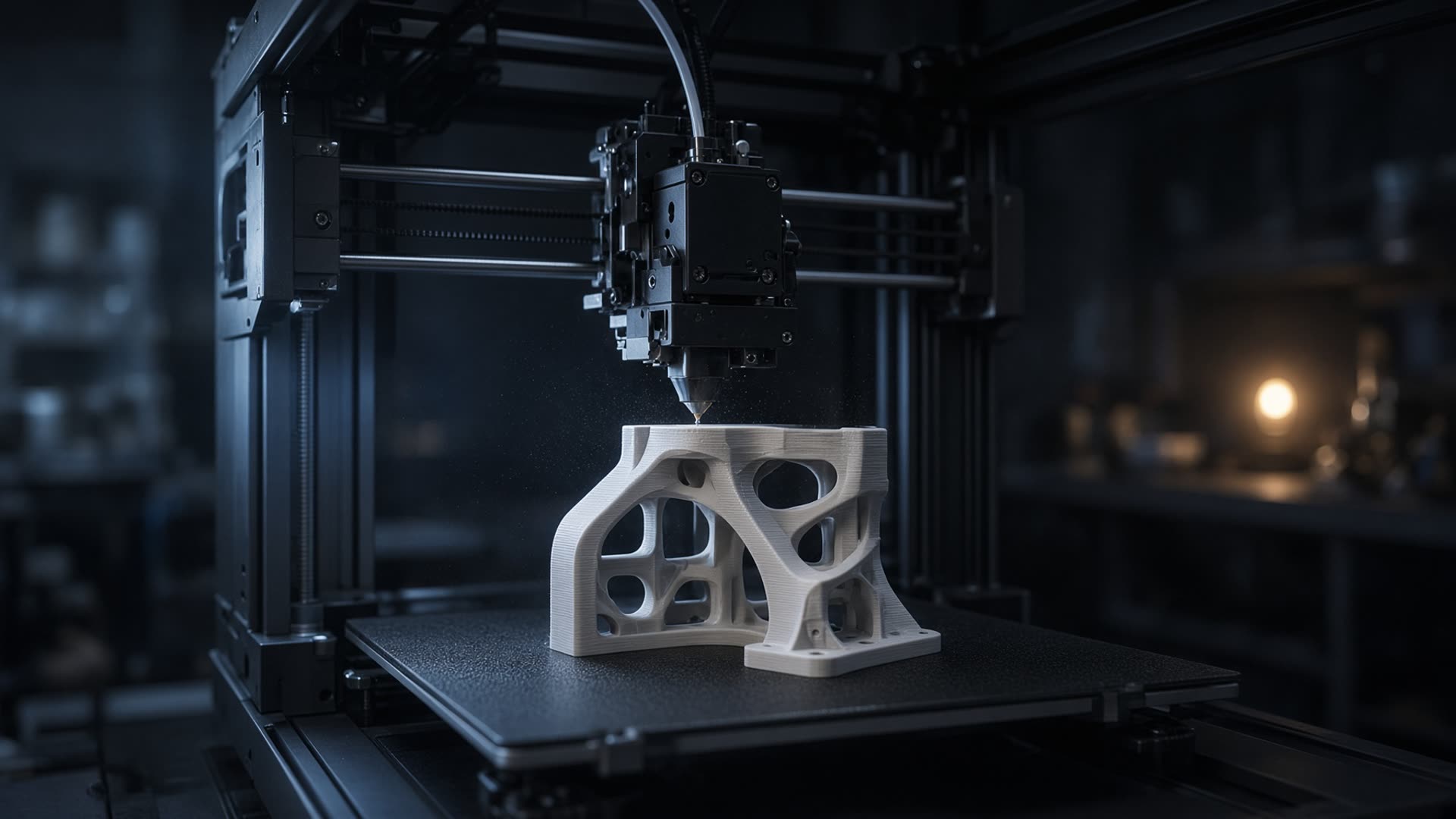
Additive manufacturing
3D printing, or additive manufacturing, turns a digital 3D model into a physical object by depositing or fusing material in successive layers. Designers export a mesh (typically 3MF or STL), a slicer converts it into machine instructions, and a printer builds the part from the print bed up.
The method started as a prototyping shortcut. It now produces jigs, custom medical devices, aircraft brackets, dental models, and short-run end-use parts — especially when volumes are low, geometries are complex, or each unit must be unique.
Additive manufacturing builds a solid object from a digital model, one slice at a time — no mould required for the first part.
A printable file can replace a warehouse of slow-moving spares. Produce the part when it is needed, where it is needed.
Lattices, internal channels, and consolidated assemblies that machining or casting cannot form in one step.
Where it is used
The same digital file can become a sketch model, a functional test article, or a certified component — depending on process and material.
Iterate a housing, bracket, or mechanism in hours instead of waiting on a machine shop or mould.
Reprint discontinued fittings, appliance covers, and industrial wear parts from a scanned or CAD original.
Surgical guides, anatomical models, aligners, and patient-specific implants from clinical scan data.
Lightweight lattice brackets, ducting, and fixtures where every gram and every unique SKU counts.
Massing models, ergonomic studies, and presentation pieces that read as the finished object.
Hands-on CAD-to-part workflows in schools, labs, and maker spaces — from first print to research hardware.
Shop aids that fit one job perfectly: drill guides, assembly nests, conformal-cooled inserts.
Dozens to a few thousand units without paying for steel tooling — until moulding economics take over.
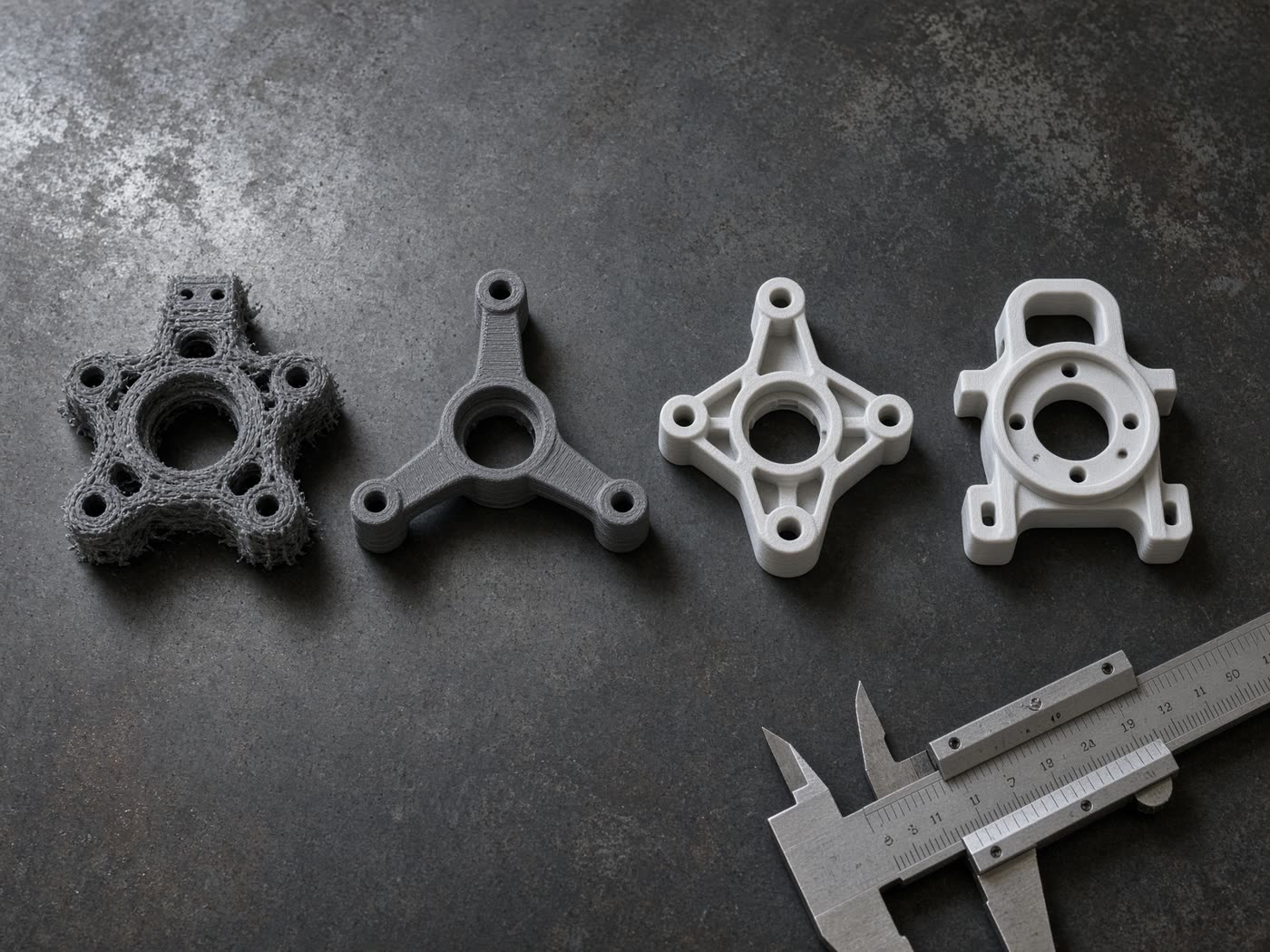
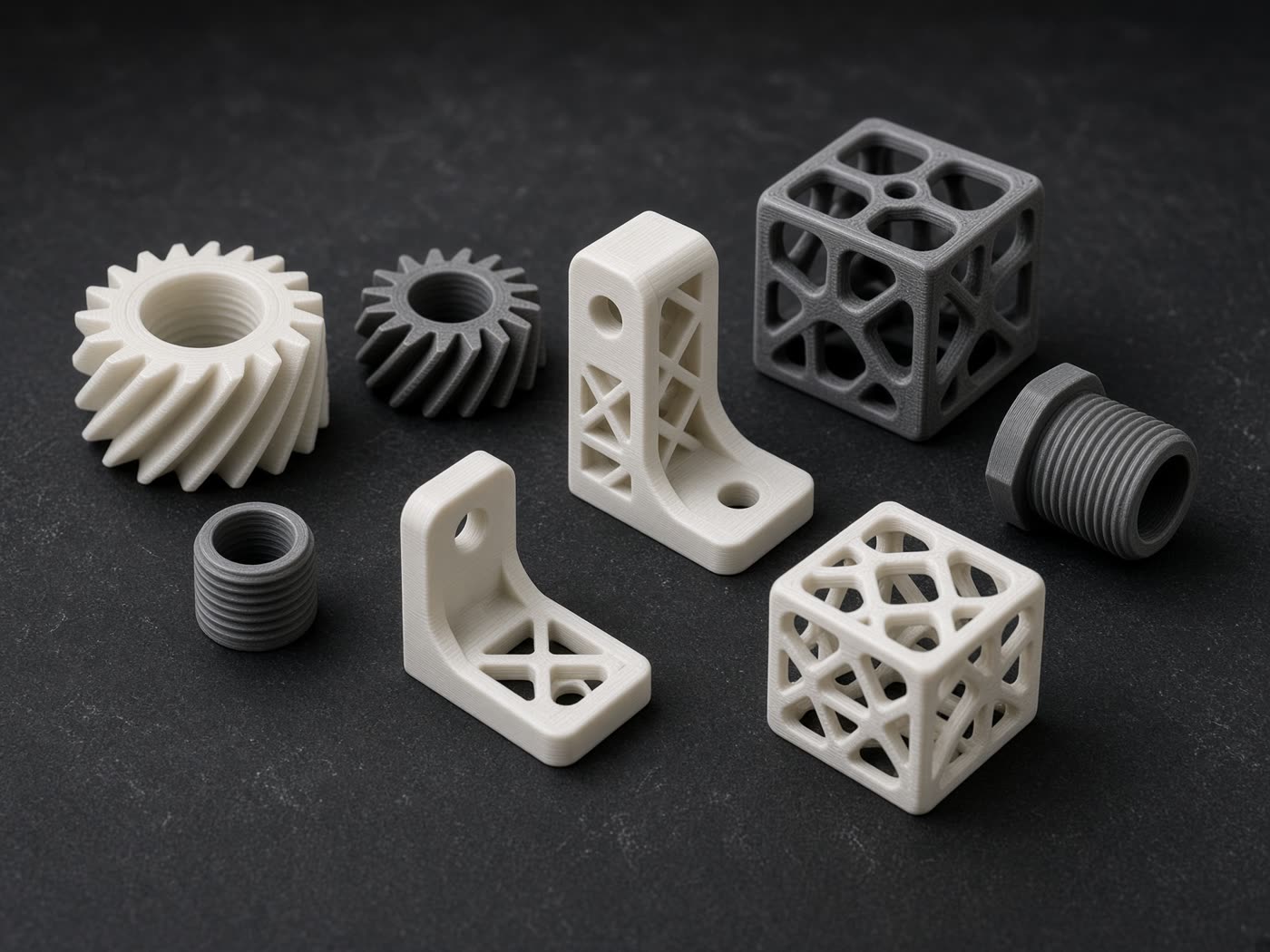
Processes
“3D printing” is not one machine. Material, resolution, strength, and cost depend on which process you specify. These four cover most commercial work.
Thermoplastic filament is melted and extruded through a nozzle. PLA, PETG, ABS, ASA, nylon, TPU, and fibre-filled blends cover most desktop and workshop work. Best for functional prototypes, housings, jigs, and large parts. Layer lines are visible; strength is typically lower across layers than along them.
Workflow
Model the part in CAD, or reconstruct it from a 3D scan. Design for the process: wall thickness, overhangs, holes, and how the part will sit on the bed.
Export 3MF or STL. A slicer orients the part, adds supports if needed, and writes machine code — layer height, temperatures, infill, and speeds.
The machine builds the object over minutes to days. Closed chambers, dry filament, and a level bed matter as much as the file itself.
Remove supports, wash and cure resin, depowder nylon, or heat-treat metal. Sand, vapour-smooth, machine, or coat as the application requires.
Fit the part. If it fails, change the model — not a steel tool — and print again. That loop is the practical advantage of additive.
Listing
This website and the domain 3dparts.no are available to purchase. It is a natural home for a print bureau, a spare-parts catalogue, a materials shop, or a Nordic additive-manufacturing brand.
Direct contact: 3dparts.no@gmail.com
Tell us who you are and we will follow up about price and transfer of 3dparts.no.
Questions